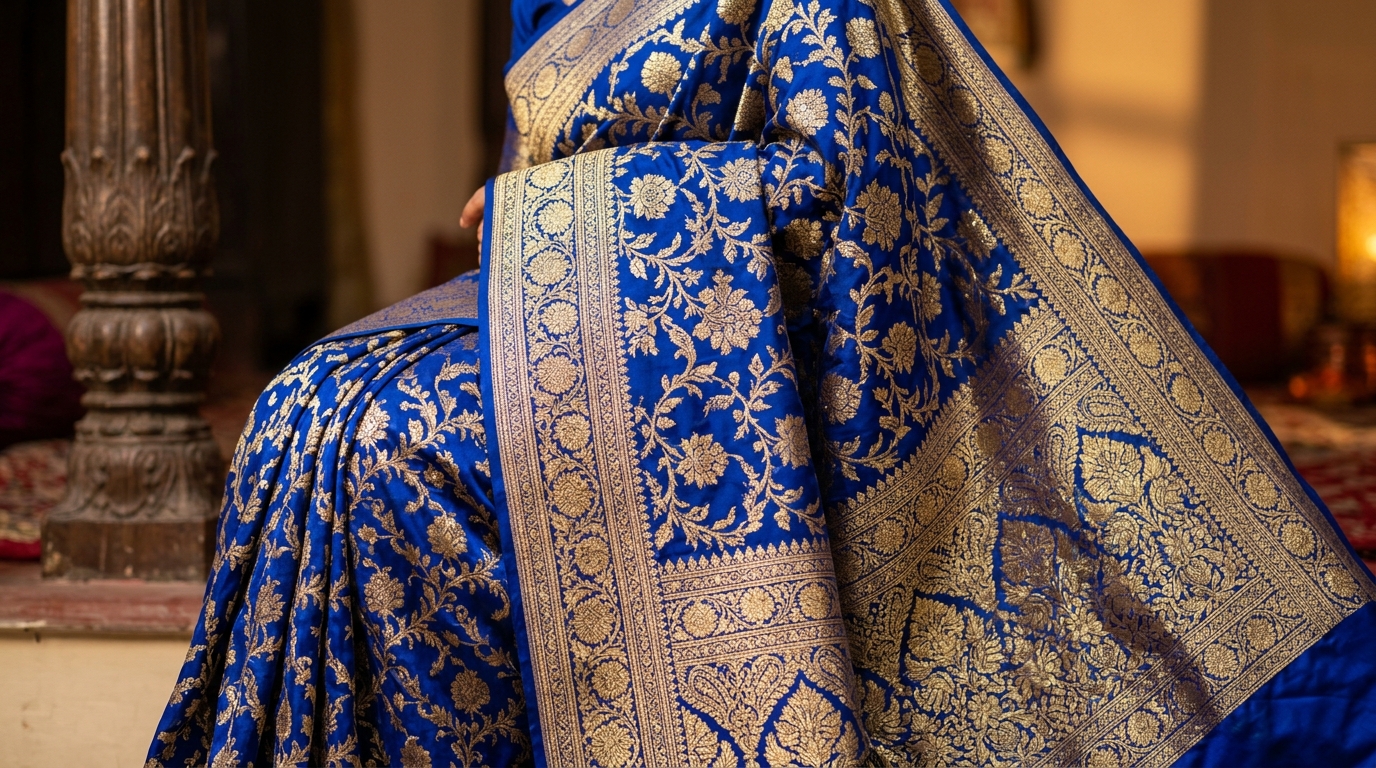
A Banarasi saree is more than fabric; it is six yards of woven history, luxury, and artistic heritage. Originating in Varanasi, these sarees have adorned royal courts and contemporary bridal trousseaus for centuries. Celebrated for their opulent silk, intricate zari (gold and silver thread) work, and rich motifs inspired by Mughal architecture, an authentic Banarasi is an heirloom, passed down through generations.
Today, distinguishing genuine Banarasi silk can be challenging. The market includes numerous power-loom replicas and synthetic blends. Understanding how to identify, style, and preserve an authentic Banarasi is essential. This guide covers these vital aspects of the craft.
Identifying an Authentic Banarasi
The prevalence of fast fashion has resulted in a market saturated with imitations. When investing in a Banarasi saree, verify its authenticity by observing these indicators:
- The Reverse Side (The Float Test): Genuine handloom Banarasi sarees display significant thread work on the reverse. A dense web of loose threads (floats) indicates the artisan's meticulous zari and silk weaving. Machine-made versions typically have a smooth, uniform reverse.
- The Silk Mark: Insist on the 'Silk Mark' certification. This Government of India initiative guarantees pure, natural silk, distinguishing it from synthetic polyester blends.
- The Pallu and Border: Authentic Banarasi weaves showcase intricate floral and foliate motifs like the kalga and bel, or shikargah (hunting scenes). A heavy, solid zari border is a definitive feature.
- Weight and Drape: Pure silk combined with genuine metallic zari imparts a substantial, luxurious weight. The saree should drape elegantly, feeling rich and cool against the skin, contrasting with the stiff, plastic-like texture of synthetic copies.
Modern Styling: Adapting the Banarasi
Traditionally reserved for weddings and grand pujas, the Banarasi saree now integrates seamlessly into contemporary fashion. Modern styling emphasizes blending traditional weaves with fresh aesthetics.
Blouse Pairings
The choice of blouse significantly influences a Banarasi saree's overall presentation.
- Traditional: For a classic, regal aesthetic, pair a heavy brocade Banarasi with a matching, conservative silk blouse, often with three-quarter sleeves.
- Contemporary: To moderate the saree's weight, opt for a solid, contrasting raw silk blouse featuring modern cuts—such as deep V-necks, halter tops, or a chic crop top. A tailored velvet peplum jacket offers a sophisticated option for cooler weather events.
Draping Styles
Beyond the standard Nivi drape, consider these alternative styles:
- The Belted Look: Cinch the waist with a traditional kamarbandh or a sleek modern leather belt. This adds structure to the heavy silk, creating a stylized, editorial aesthetic.
- The Lehenga Drape: For an effect reminiscent of a lehenga without its typical weight, a heavy Banarasi can be pleated entirely around the waist, producing a striking illusion.
Minimalist Jewelry
Given the Banarasi saree's opulent nature, modern styling emphasizes balance. Avoid overwhelming, heavy gold sets in favor of minimalist statement pieces. A single choker or intricate Polki earrings often suffice, allowing the saree's weave to remain the focal point.
Preservation and Care: Protecting Your Heirloom
Banarasi silk demands meticulous care to prevent zari tarnishing and fabric damage. Adhere to these essential preservation guidelines:
- Dry Clean Only: Never wash a Banarasi silk saree at home. The delicate zari and natural dyes are susceptible to bleeding or losing their luster. Always entrust cleaning to a professional dry cleaner.
- Muslin Wrap: Avoid storing Banarasi sarees in plastic covers; these trap moisture, leading to zari oxidation and discoloration. Instead, wrap them in pure, unbleached cotton or muslin cloth to allow the fabric to breathe.
- Regular Refolding: Do not leave the saree folded along the same creases for extended periods, as this can weaken and tear the silk. Every 3 to 4 months, remove the saree, allow it to air in mild, indirect sunlight, and refold it along new lines before storage.
- Avoid Perfumes: Never spray perfume or deodorant directly onto the saree. The chemicals will instantly stain the silk and permanently damage the metallic threads.
A Legacy of Elegance
To own a Banarasi saree is to possess a piece of Indian artistry. Its enduring appeal lies in its versatility and inclusive beauty, gracing women of all ages and body types with spectacular elegance.
For those seeking to add an authentic, beautifully crafted Banarasi to their wardrobe, or who simply appreciate the elegance of this timeless traditional garment, explore the exquisite collections at vamika.brandez.online. Find the perfect weave that reflects your personal style and carry a rich piece of heritage with pride.